This article contains affiliate links.
For international readers: This article is based on the original Japanese version, but it has been localized rather than translated word for word. Short explanations of Japanese food, mountain huts, and water-source customs have been added so that readers outside Japan can enjoy the cultural background as well as the science.
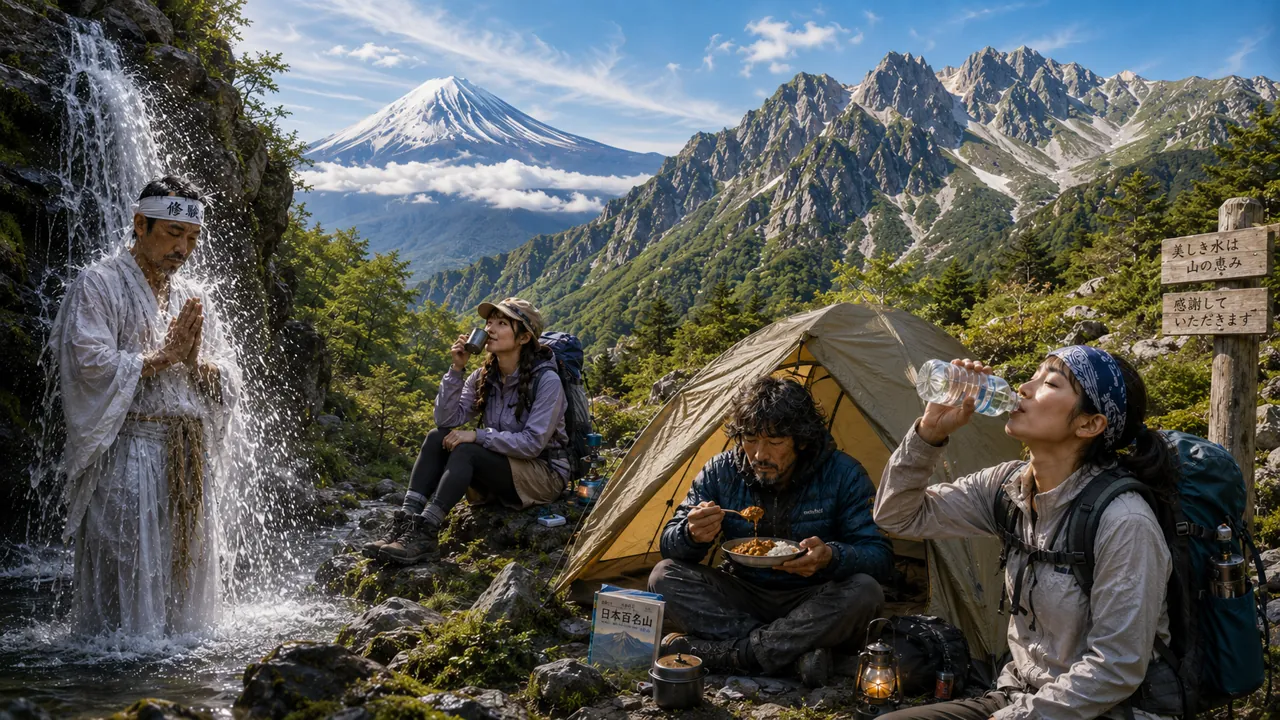
One summer, after reaching the summit and walking on tired legs to a mountain hut, I drank from a tap there.
The water was so good that I stopped for a moment.
It was cold, clean-tasting, and seemed to slide down my throat. Fatigue certainly made it more satisfying, but I have found water in the Japanese mountains that was memorable enough to become part of the reason for the hike itself.
Why does mountain water in Japan so often feel this refreshing?
One important part of the answer is soft water.
Soft water is not only a matter of taste. It has influenced Japanese cooking, tea, rice, trail meals, and even the way hikers talk about water.
Water hardness still varies by geology and water source. This article mainly describes the relatively soft water common across much of mainland Japan.
1. What Are Soft Water and Hard Water?

Geology, rainfall, and short, steep rivers all influence water hardness.
Understanding water hardness
Water hardness describes the amount of dissolved calcium and magnesium, usually expressed as milligrams per liter of calcium carbonate:
mg/L as CaCO₃
For everyday comparison, this is roughly equivalent to parts per million, or ppm.
The World Health Organization commonly describes hardness in the following ranges:
| Hardness (mg/L as CaCO₃) | Classification |
|---|---|
| 0–60 | Soft |
| 60–120 | Moderately hard |
| 120–180 | Hard |
| Over 180 | Very hard |
Source: World Health Organization, “Hardness in Drinking-water.”
Tap water in many parts of Japan falls roughly within the soft-to-moderately-hard range. Some mountain springs and streams contain even fewer dissolved minerals.
This is a broad tendency, not a rule. Hardness varies greatly by region and source.
Why soft water is common in Japan
Japan’s landscape helps explain the pattern.
First, many Japanese rivers are short and steep. Water often moves from mountains to the sea relatively quickly, leaving less time to dissolve calcium and magnesium from rock and soil.
Second, many mountain areas contain volcanic rock or granite. These do not always supply as much calcium and magnesium as limestone-rich geology.
Japan also receives abundant rainfall, which frequently renews and dilutes surface and groundwater.
There are important exceptions.
Okinawa has extensive Ryukyu limestone and generally harder water than much of Honshu. Local limestone areas elsewhere in Japan, including parts of the Chichibu region, can also produce harder water.
A familiar experience for hard-water readers
Readers in hard-water regions may know the white mineral scale that quickly forms inside an electric kettle.
That scale is a visible reminder of dissolved calcium and magnesium.
In much of Japan, kettle scale accumulates more slowly. The difference can also be noticeable in tea, soup stock, rice, and the general mouthfeel of drinking water.
However, hardness and safety are separate issues.
Soft water can contain harmful microorganisms or chemicals. Hard water is not automatically unsafe. Whether mountain water is drinkable depends on source management and contamination risk, not on hardness alone.
2. Japanese Food Developed Around Soft Water

Many familiar Japanese flavors and textures developed in a soft-water environment.
Dashi, green tea, and rice
Dashi is a light Japanese stock used as the base of many soups and dishes.
One common type, kombu dashi, is made by extracting flavor from dried kelp. Its most famous flavor component is glutamate, associated with umami, often described as the fifth basic taste.
Soft water is generally well suited to the delicate extraction expected in Japanese dashi. Harder water can change the balance of flavor and extraction.
The same applies to green tea.
People from tea-drinking cultures may already know that water hardness can change a cup of black tea. Green tea is also sensitive to the water used. Soft water tends to preserve the light color, fragrance, sweetness, and clean finish often valued in Japanese tea.
Rice is another example.
Many Japanese diners prefer rice that is soft, slightly sticky, and pleasantly chewy—a texture sometimes called mochi-mochi in Japanese. Water mineral content can affect how rice absorbs water and softens during cooking.
These are not absolute rules, but they show why water cannot be separated from food culture.
Soft water and Japanese trail meals
Japanese hikers often use simple trail meals, or yama-meshi.
Common examples include:
- Freeze-dried miso soup
- Instant soup
- Dehydrated precooked rice (often referred to as “alpha rice” in Japan, similar to quick-cooking or freeze-dried rice)
- Noodles and other foods rehydrated with hot water
Because these products are mainly developed for the Japanese market, their flavor and texture are likely to be evaluated primarily with the relatively soft water common in Japan.
That may help explain why a Japanese trail meal can taste slightly different when prepared with very hard water in another country.
The reverse can also be interesting.
A visitor to Japan may find that instant miso soup, green tea, rice, or mountain coffee tastes unusually balanced when prepared with local water.
The water is not the only reason—but it is part of the experience.
3. Why Soft Water Feels Natural on a Hike

Water should be easy to drink, but it cannot replace food and electrolytes during a long hike.
Easy to keep drinking
Hydration affects comfort, performance, and safety.
Many people accustomed to soft water describe it as light, smooth, or easy to drink. This can be especially welcome late in a hike, when fatigue, heat, or altitude has reduced appetite.
Taste and tolerance are personal, however. Someone raised in a hard-water region may not experience soft water in the same way.
Hard water and the stomach
Some hard mineral waters are high in magnesium.
High-magnesium water can have a laxative effect, especially when consumed in a large amount by someone who is not accustomed to it. On a mountain trail, stomach trouble can quickly become a safety problem.
This does not mean that ordinary hard tap water is inherently unsuitable for hiking. The actual mineral composition and the drinker’s tolerance matter more than the hardness label alone.
Water is not a complete electrolyte plan
Hard mineral water may contain calcium and magnesium, but it should not be treated as a complete sports drink.
During prolonged sweating, sodium replacement may also matter. Depending on temperature, effort, diet, and individual needs, hikers may use:
- Regular food
- Salty snacks
- Electrolyte drinks or powders
- Electrolyte tablets
Drinking large amounts of plain water without eating or replacing sodium during prolonged heavy sweating can also create problems.
Water keeps you hydrated. Food and electrolytes support the rest of the system.
4. Enjoying Mountain Water Safely in Japan

Clear water is not necessarily safe water.
Water as part of the hiking experience
Japanese hikers often talk about water by taste.
You may hear comments such as:
- “The water at that hut was excellent.”
- “That spring made wonderful coffee.”
- “I always refill at that water source.”
This reflects both the availability of relatively soft water and a food culture that pays close attention to clean, subtle flavors.
In Japan, however, the word mizuba—literally “water place”—can refer to very different things:
- Water supplied by a staffed mountain hut
- A maintained and tested drinking-water source
- A source marked on a hiking map
- An unmanaged spring or stream
These do not have the same level of safety.
A tap, pipe, or clear flow does not automatically mean that the water is potable. Water availability can also change with season, drought, hut closures, and frozen plumbing.
Check current trail information, signs at the source, and advice from mountain-hut staff.
Clear water can still make you sick
Even beautiful mountain water can contain:
- Bacteria such as Campylobacter
- Viruses
- Protozoa such as Giardia or Cryptosporidium
- Contamination from wildlife, livestock, people, or hut wastewater
- Agricultural chemicals
- Heavy metals or other chemical pollutants
Upstream conditions are not always visible from where you collect the water.
“It looks clean” is not a safety test.
Which water sources are reasonable to use?
Prefer water that is clearly identified as potable through current information, such as:
- A source managed and regularly tested for drinking
- Water provided as potable by a mountain hut
- A source currently confirmed by local authorities, trail managers, or hut staff
For an uncertain natural source, treatment can reduce biological risk—but it has limits.
Boiling
For this article, I use the practical standard introduced by Japanese outdoor magazine BE-PAL from guidance issued by U.S. environmental and public-health authorities:
- Bring clear water to a full rolling boil for at least 1 minute
- At elevations above 2,000 m / 6,500 ft, boil for 3 minutes
- Let it cool in a clean, covered container
If the water is cloudy, allow sediment to settle and pre-filter it through a clean cloth or suitable filter before boiling.
Boiling can kill bacteria, viruses, and parasites.
It does not remove heavy metals, salts, most chemicals, toxins, or radioactive contamination.
Portable filters and disinfection
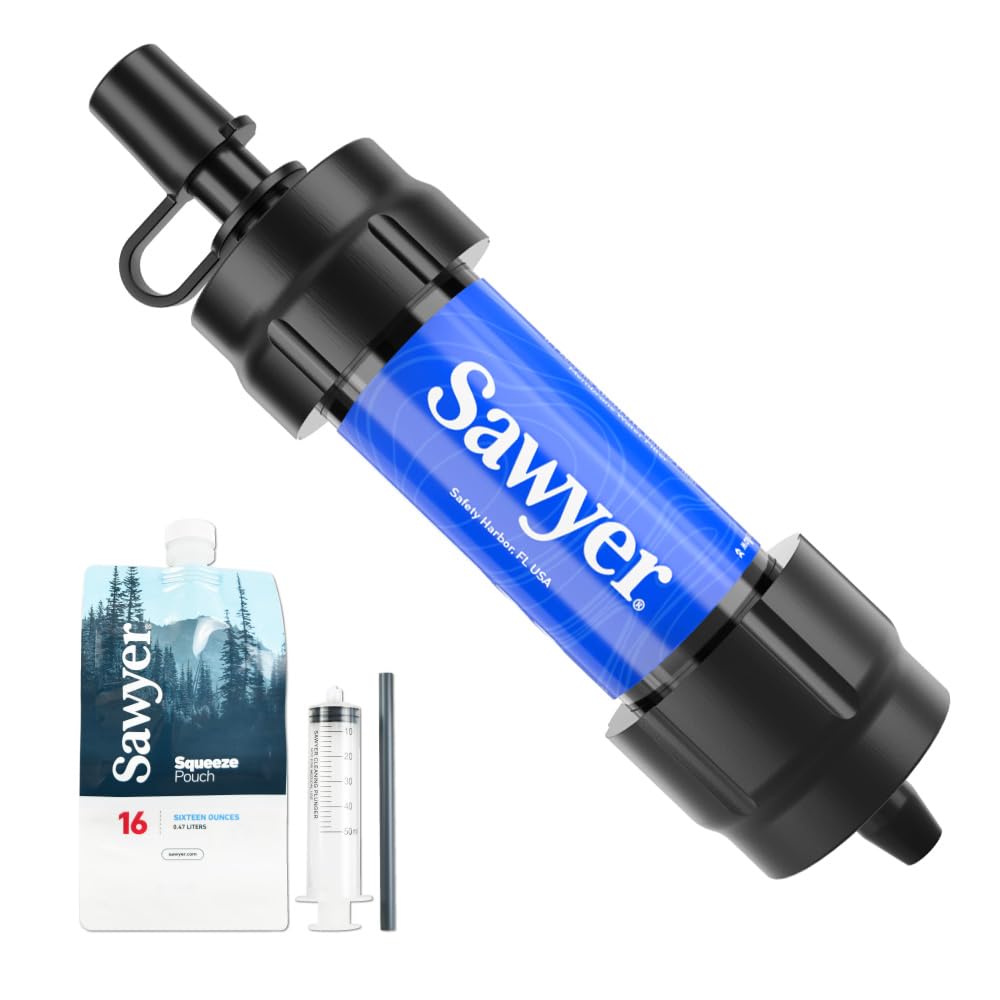
Portable filters differ greatly.
Many lightweight backpacking filters remove protozoa and bacteria but do not reliably remove viruses. Some filters remove protozoa but not all bacteria.
Read the manufacturer’s specifications rather than assuming that the word “filter” means complete purification.
Where biological contamination is possible, a practical approach may be:
- Collect the clearest available water
- Pre-filter cloudy water
- Use an appropriate portable filter
- Add a compatible disinfection step when necessary
Chemical disinfectants and UV devices also have limitations. Cloudy water can reduce their effectiveness, and chemical treatment does not remove harmful dissolved chemicals.
A special warning for low mountains near the Kanto region
Many low mountain areas around Kanto have a history of mining, quarrying, smelting, or other industrial activity.
An old mine may be hidden upstream, overgrown, or absent from a casual visitor’s map.
Because boiling and ordinary backpacking filters do not remove dissolved heavy metals or many chemical contaminants, stream water in an area with possible mining history should not be treated as drinkable merely by filtering and boiling it.
In such terrain, carry known-safe water or use a source specifically confirmed as potable.
This is a different problem from bacteria or parasites: no amount of boiling can make chemically contaminated water safe.
Hokkaido and Echinococcus
Hikers in Hokkaido should also check current local guidance concerning Echinococcus, a parasitic infection associated with contaminated soil, water, food, or animal feces.
Water treatment is only part of prevention. Hand hygiene and avoiding contamination from soil or wild-animal feces are also important.
5. Water Culture: Japan and Overseas Hiking
Different priorities, not better or worse
Water practices vary by country, region, geology, and trail environment.
The following is a broad cultural observation, not a rule covering every hiker.
In many North American backpacking guides and long-trail discussions, water is first described in terms of:
- Availability
- Filtration
- Disinfection
- Carrying capacity
- Dry sections between sources
Japanese hiking conversations also cover those issues, but hikers often spend more time talking about the taste of a particular spring or hut supply.
That difference makes sense.
A landscape shapes its water. Water shapes food. Food and repeated experience shape the language people use outdoors.
Advice for visitors hiking in Japan
When hiking in Japan:
- Do not assume every mountain tap or stream is potable
- Check whether a mountain hut is open and whether water is available
- Carry enough water for seasonal or unexpected source failure
- Ask hut staff when the status of a source is unclear
- Treat unmanaged natural water when biological contamination is possible
- Avoid water where chemical or mining contamination may be possible
Once safety is confirmed, try preparing a Japanese trail meal with the local water.
Alpha rice, freeze-dried miso soup, green tea, and mountain coffee offer a small but memorable way to experience the relationship between Japan’s geology and food culture.
Conclusion
The connection between Japanese mountains and soft water is larger than a question of taste.
Short, steep rivers, rainfall, and local geology have produced relatively soft water across much of Japan. That water helped shape dashi, tea, rice, and the subtle flavors valued in Japanese cooking.
The same background appears in hiking culture.
Water from a trusted mountain source can feel like more than hydration. It becomes part of the place: something people remember, discuss, and sometimes return for.
But enjoyment begins with correct source information.
Soft does not mean safe. Clear does not mean clean. Filtering and boiling do not remove every hazard.
When the source is confirmed as potable, take a moment to enjoy it. The taste may tell you something about the mountain beneath your feet.
Soft water is also closely connected with mountain coffee. Water chemistry, lower boiling temperatures at altitude, fatigue, and the outdoor setting can all change how coffee tastes.
The next article explores those factors in detail:
Why Does Coffee Taste Better in the Mountains? Four Mechanisms Involving Water, Boiling Point, Fatigue, and the Senses(Available in Japanese)
Mountain Water Culture Series
- Why Does Mountain Water Taste So Good in Japan? Soft Water, Food, and Hiking Culture(Available in Japanese)
- Why Does Coffee Taste Better in the Mountains?(Available in Japanese)
- Does Altitude Change the Taste of Coffee? A Guide to Roast Level and Brewing in the Mountains(Available in Japanese)
Purchases made through this link may help support the operation of this blog.
YouTube
(Japanese-language video. English subtitles are not currently available.)